

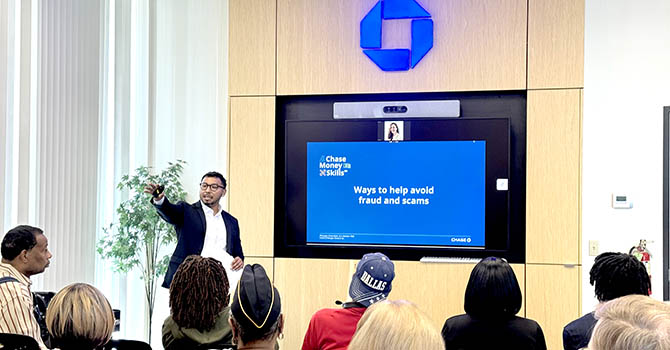
(Sponsored by JPMorganChase) – As the holiday season brings joy, generosity and increased shopping, it also marks the peak time of year for scammers looking to take advantage of busy consumers.
That’s why Chase and the Dallas Police Department joined forces on Friday, Nov. 21, to help local Dallas residents protect themselves from fraud and scams that are especially prevalent during the holidays.
Last year alone, Texans lost more than $920 million to fraud and scams.
Chase regularly hosts more than 1,000 free fraud and scam prevention workshops nationwide each year, many in partnership with local law enforcement. This November, Chase is holding over 20 workshops in honor of International Fraud Awareness Week, helping consumers stay safe during the busiest shopping period of the year.
Here are some tips to help North Texans avoid common scams this holiday season:
Three common scams to watch out for:
- Delivery Scams: If you receive a message about a delivery issue or a request to confirm personal account information, report it as junk or spam, delete it, and do not open it. These scams often impersonate popular companies to steal your information and money.
- Online Shopping Scams: When shopping online or on social media, buy only from trusted websites and vendors. Be wary of sellers who urge you to act quickly, ask for immediate payment, or claim you have overpaid and offer to send money back. Never use Zelle to pay for goods or merchandise and avoid buying items you cannot verify exist.
- Gift Card Scams: Scammers may request payment via gift cards or “sell” gift cards through third-party sites that do not work and may compromise your account information.
Tips to avoid scams:
- Stay Alert to Online Shopping Scams: Purchase only from trusted websites and vendors. Scammers create fake sites that look legitimate and may appear in top search results or if you mistype a retailer’s name. If you’re unfamiliar with a store, search for their name along with terms like “scam,” “complaints,” or “reviews” to identify any red flags.
- Watch for Scammers Impersonating Delivery Companies or Familiar Brands: Be cautious of calls, texts, or emails claiming issues with an order or requesting money to resolve account problems. Never click on unsolicited links; instead, delete, block, and report messages from unknown senders.
- Steer Clear of Social Media Scams: Scammers are active on social media marketplaces, often convincing customers to send money for non-existent goods or deals that seem too good to be true. They typically request payments via Zelle or similar apps for immediate transactions. Always stay on the platform and avoid purchasing goods you cannot verify.
- Don’t Send Money to People You Don’t Know: When you send money digitally, it is the same as sending cash. Don’t send money to someone you don’t know or to pay for merchandise or services you can’t be sure you’ll get – you may never get it back.
Beware of Unrealistic Deals: Scammers lure buyers in with massive discounts on popular or sold-out items. If a deal seems too good to be true, it’s likely a scam.
Chase encourages everyone to visit https://www.chase.com/scamspotting, a free resource available in English and Spanish, for more information on common scams and tips to protect yourself and your loved ones this holiday season.